
Why termite treatment is different in the Inner West
Melbourne’s Inner West is good termite country. The clay soils along the Maribyrnong River and Stony Creek hold moisture well into summer, mature eucalypts in the street and in back gardens provide food and nesting sites, and the housing stock gives subterranean termites plenty to eat. Federation and Edwardian weatherboards in Yarraville, Seddon and Kingsville sit on timber stumps over shallow subfloors, and the post-war brick veneer homes of Altona, Sunshine and Braybrook hide timber frames behind a single skin of brick that termites can climb inside unseen.
The species responsible for most of the damage we treat is Coptotermes acinaciformis. It builds large colonies, often in the base of a living tree or an old stump, and forages out through the soil to timber up to several house blocks away. Nasutitermes exitiosus also occurs across the west, usually from a mound nest in a garden bed or under a slab, and needs a slightly different approach. Locals still call both of them white ants, but they are not ants at all, and the products that control ants do nothing useful against them.
Termite damage is generally not covered by home insurance in Australia. If a colony gets into your bearers and joists, the repair bill is yours. That is why treatment has to be aimed at the colony, not just the timber you happened to notice them in.
What happens on treatment day
The inspection comes first
Every treatment begins with a full termite inspection of the building. We need to find every entry point, trace the workings with a moisture meter and thermal camera, check the subfloor and roof void, and work out where the moisture that is attracting them comes from. A leaking shower base or a garden bed built up against weatherboards will undo an otherwise good treatment.
Treating the live workings
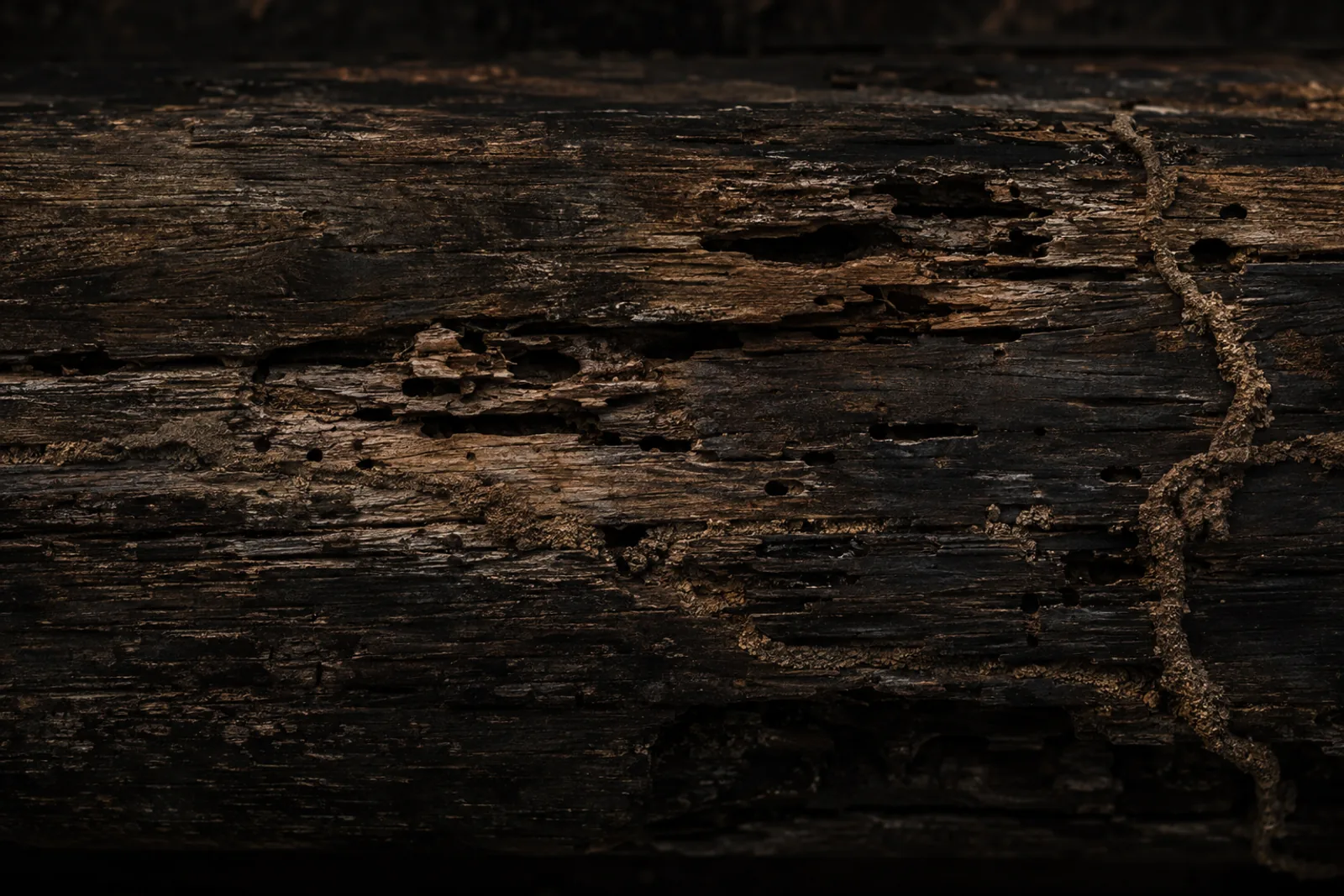
Active workings are treated directly. Depending on the timber and the moisture in the galleries, that means a fine termiticide dust blown into the workings or a non-repellent foam expanded through them. The termites do not detect the product, so they keep feeding, groom each other and carry it back through the colony. The workings are opened carefully, treated and closed again so the termites keep using them.
Cutting the colony off from the house
Direct treatment deals with the termites currently in the building. The second half of the job stops the colony, or the next one, coming back. Under AS 3660.2, the Australian Standard for termite management in existing buildings, there are two main routes.
A chemical soil treatment creates a continuous treated zone around and under the building. Soil against footings is trenched and treated, subfloor soil is rodded, and paths, patios and garage slabs are drilled and injected at set spacings. We favour non-repellent termiticides, such as fipronil-based products, because termites pass through the treated soil unaware and transfer the product to nest mates. Repellent products like bifenthrin form a zone termites avoid, which protects the building but does not reduce the colony. A termite barrier of this kind is the usual retrofit for existing homes and must be renewed at the interval on the product label.
The other route is a termite baiting system. In-ground stations are placed around the perimeter and, where there is active feeding, above-ground boxes go directly on the workings. The bait contains a chitin synthesis inhibitor that stops the termites moulting, and colony elimination follows over weeks to months as it spreads through the nest. Baiting suits slab homes surrounded by paving, townhouse infill from the 1990s and 2000s with shared walls, and blocks where the nest is obviously in a large tree.
Often the right answer is a combination: dust the workings, install a treated zone on the accessible sides and bait where drilling would be impractical. The written proposal sets this out before any product goes in.
After the treatment
We come back to confirm the workings are dead, then issue a treatment certificate and site plan that record what was done, where and with which product. Buyers, conveyancers and future pest managers will ask for them.
Foraging termites from a new colony can reach a treated zone, which is why AS 3660.2 recommends inspections at least annually, and more often where the risk is high. An annual termite inspection checks the treated zone is intact, looks for bridging over it, and catches any new activity while it is still cheap to deal with.
You can help too: clear blocked subfloor vents, fix leaking taps and overflow pipes, keep firewood off the ground and away from the walls, and keep garden beds below the slab edge or damp course.
Local factors we plan around
Weatherboards on stumps in Yarraville, Seddon and Kingsville usually have a subfloor we can crawl through, which makes rodding and treating the soil under the house straightforward. Brick veneer on a slab in Altona or Sunshine needs attention at the slab edge, the weep holes and every concrete path that runs against the wall. The old warehouses and factories converted to apartments in Footscray and Spotswood carry heavy hardwood beams that termites love, and little record of any earlier treatment. Townhouse infill on subdivided blocks brings shared walls and small courtyards, so we often need to talk with the neighbour before a full treated zone is possible.
When to book
If you have found live termites, do not spray them, do not open more of the wall and do not pull the timber apart. Leave the area dark and undisturbed and get in touch. The sooner active workings are treated, the smaller the damage and the better the chance of a clean colony elimination. Our technicians hold the licensing Victoria requires for pest management, and the first step is always an inspection and a written plan. Contact us for a free quote anywhere in the Inner West.